4242 and the Cinema of Displacement with Filmmaker Sara Eustaquio
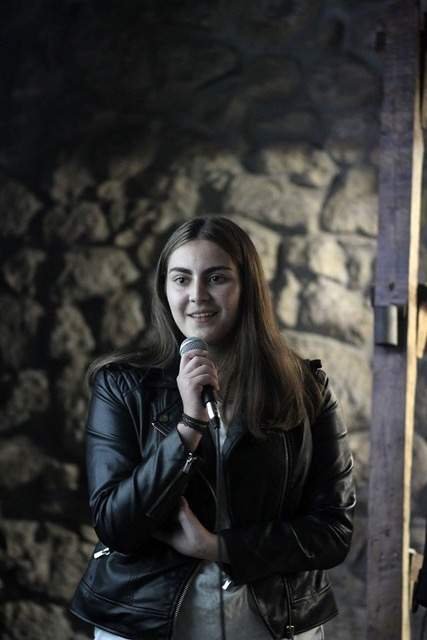
Filmmaker Sara Eustaquio is confident in the power of film to move hearts. One of the shining examples of this is her film on the subject of how an immigrant feels in a new country titled 4242. Though one of her earliest projects, 4242 had endured in its relevance as different cultures seek to understand and deal with the question of immigrant assimilation. Proof of its global resonance is found in the numerous countries which have recognized this film at prestigious events including the Los Angeles Film Awards, London Film Awards, Arab International Film Festival, Seoul International Youth Film Festival, Barcelona Planet Film Festival, Canadian Diversity Film Festival, Delhi International Film Festival, and a plethora of others. Remarkably eclectic, this film ranges at times from visual poetry to social media aesthetics and all points in between. In creating this story, Sara has arrived at a universal tone which is relatable regardless of age, cultural perspective, or political viewpoint. If the goal is to sincerely feel how it is to be a stranger in a strange land, 4242 achieves this end with a disorienting yet heartfelt confidence.
Throughout her career as a filmmaker, Sara has been outspoken about her affinity for collaboration. While an overview of her catalogue clearly indicates her individual voice and style in regard to illuminating personal struggles that most people quietly endure, Sara’s directing style is rooted in her willingness to get the best performance from an actor through investing in their ownership of the character. She stipulates that 4242 is the spark which ignited such a potent approach. She divulges, “Cristi (lead actress) had experienced a very similar life situation and in this sense, the film is more biographical than fiction. We rejected the concept of a formal script and fed upon the creative freedom this allowed.”
Rather than a linear storyline, 4242 is built upon the foundation of three emotional sections. The first of these was a feeling of general happiness. The direction come from a romanticization of life. Actions like dancing with a towel or skipping down the stairs in public spaces relates a sense of embracing the newness of change with an eager heart. These visual cues communicate the internal emotional state. Sadness and nostalgia are depicted in public spaces where the world around Cristi seems to pass by without a sense of inclusion. This is a literal example of her old life moving on without her while the new one fails to welcome her. She is displaced. Once anger and frustration set in, televisions replay old memories as a voice-over reveals that she’s 4242 km away from home, now alone with her memories. The frames are flooded with a red light, meant to heighten and represent her anger and loneliness. Some of the scenes for 4242 were filmed off the cold ocean shores of Portugal in December, an indicator that the pain seen on-camera permeated the actual production process. Though she initially wanted to cut out moments like this, her lead actress’ insistence that such a scene was vital to the film encouraged Sara. She notes, “It worked perfectly for what I had in mind. And because there were so many waves, we got what we needed in a very short amount of time. That moment and that discussion showed me how important it is to check in with actors, understand their boundaries and decide what lengths are worth going for in a film. We ultimately decided to go for it, which I’m incredibly grateful for, but it’s a moment that aligns deeply with my values as a director. Film is a collaborative art form and I want to provide the safest environment possible for everyone working with me. That experience was crucial in understanding what I needed from an actor’s performance and what is needed from me to make it possible.”
The audience does not see a single word uttered from Cristi’s mouth during the film. 4242 is a remarkable film in its ability to communicate the feelings of a person who feels very out of place. It’s a space that we all inhabit at some point in our lives. To take these internal emotions and display them in an external manner without dialogue is incredible filmmaking by the entire cast and crew. 4242 is easy to watch, easy to feel, and just as easy to recommend.
Writer : Calvin Hooney